
Quality versus Savings
When to Splurge and When to Save
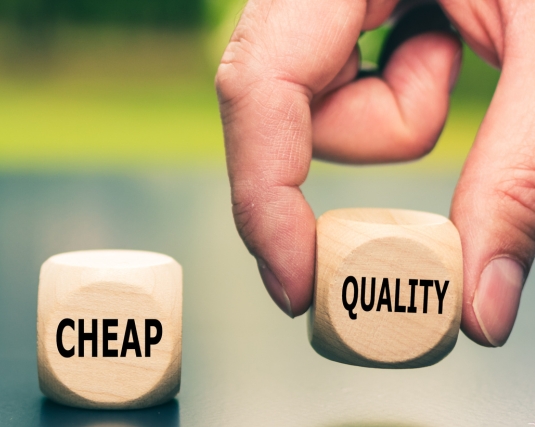
Saving money is important, but sometimes it’s worth it to splurge on the name-brand item. The hard part is deciding when to splurge and when to save. Continue reading for tips to help you decide if the more expensive item is actually worth it.
Why is there a difference in price?
There are a few reasonable assumptions as to why something might cost more than other brands:
- It’s made with higher-quality parts or ingredients.
- Something about it is difficult to obtain.
- Or the product is from a well-known and trusted brand.
Most of the time, you can make these assumptions based on those three points:
- The product may do whatever it does better.
- You may spend less on future repairs or maintenance.
- The product may last longer.
- The seller may offer a better warranty on the product or be easier to work with.
- The product may hold its value better, meaning you would get more for it if you were to sell it again.
People normally make the opposite assumption about lower-priced items, but that won’t be true in every situation.
It’s important to recognize that a higher cost doesn’t always equal a better option or even an overall better product.
Don’t Be Duped
These assumptions are sometimes used by sellers to persuade you to pay more than necessary. They’re aware that you can think something is better off or of higher quality just because it costs more, but that isn’t always true. Depending on the products and the significance of the price difference, you might not be able to tell the difference between the two items in practice. If it’s a piece of equipment or something that needs to perform a specific job, the less expensive choice might perform that job just as well or even better than the more expensive option.
Also, a more expensive product can include extra features that you honestly don’t need. Even though it would be nice to have every upgrade and flashy new feature imaginable, the product might work fine for its intended purpose without them. In other words, paying more for items that aren’t truly needed is often a bad idea.
But there are some instances where it will probably be worth it to pay more for what may be a better item overall. For example, if a broken or malfunctioning product could be dangerous to you or someone else, it may be worth getting the item that you have the most confidence in, even if it’s more expensive. Also, if a company is known for making good products, timeliness, and excellent customer service, you may want to consider paying more to get an item from that company. Researching different options can help you make an informed decision.
Taking the Gamble
What the cost vs quality debate really boils down to is risk level and priorities. Are you willing to gamble that the cereal for $1.50 will taste fine compared to the cereal for $3.50? Perhaps. But it quickly becomes more complicated when the stakes get bigger. Are you willing to risk that a cheap car will last as long or hold its value as well as a car that’s more expensive? Maybe or maybe not.
Of course, the reasons for selecting one product over another will be as varied as the products themselves, but these three considerations can help you find the balance between what you’re willing to risk and what you need to prioritize:
1. The possibility and severity of a negative outcome should the product not work as well as another.
2. The price of upkeep, repairs, or replacements.
3. What others have said about the quality of the product.
Overall, higher costs are often associated with benefits of some kind, but whether or not those benefits are worth the increased price depends on the product and the purpose for which you’re buying it. There are certainly times when it's better to go with a more expensive, higher-quality product, but that won’t be the case for everything. Do your research to help you decide where you can save and where you need to be willing to spend a little more.